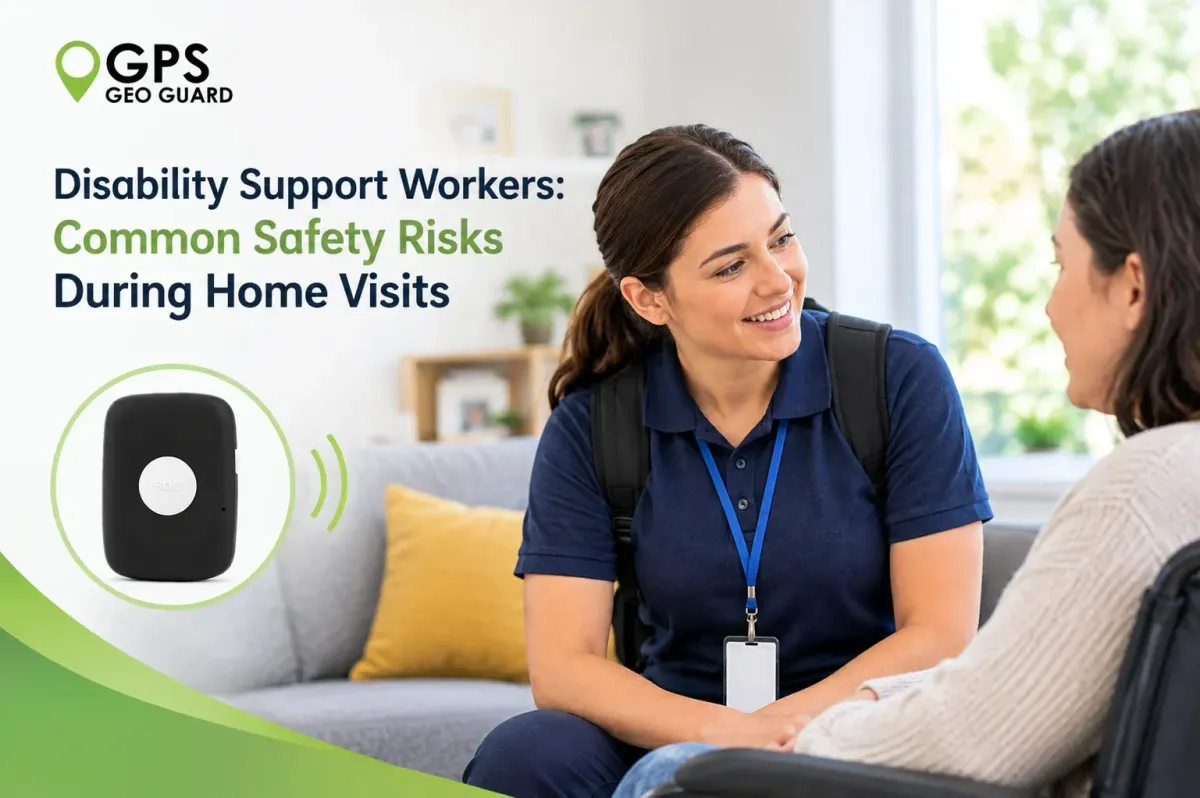
Disability Support Workers: Common Safety Risks During Home Visits
Disability support workers across Australia spend much of their day inside other people’s homes. They arrive alone, work one-on-one with a client, and often stay for hours without a colleague or supervisor nearby.
While most visits go smoothly, there may still be some chances of unpredictable incidents. A client may become aggressive, a worker may fall during a transfer, or a medical event may leave someone unable to call for help. Under WHS law, employers carry a duty of care for workers in these settings, which makes lone worker safety part of their legal responsibility.
This blog covers the most common safety risks support workers face during home visits, how standard check-ins fall short, and which personal safety devices give lone workers reliable protection.
Why Home Visits Can Create Safety Risks for Disability Support Workers ?
A client's home isn't a workplace the employer controls. Nobody runs safety checks before a shift, no security staff are on site, and no colleague is down the hall. The support worker deals with whatever the home presents on the day and usually deals with it alone.
The research shows how often that goes wrong. An Australian report found that 69% of home care workers had felt unsafe in a client's home, 45% had been injured at work, and 60% had experienced abuse.
A handful of factors push that risk up:
Working alone, often after dark
Home layouts that make it hard to step away from an escalating situation
Manual handling during transfers and personal care, the biggest cause of workplace injury in Australia
Wet areas like bathrooms, where slips and falls are more likely
Travel between client homes, which adds road risk to the day
These factors make lone worker safety a daily issue for support work. The worker is usually the only person who can raise the alarm, and an injury or incident can leave them unable to reach a phone.
Common Safety Risks Disability Support Workers Face During Home Visits
Here are some common risks support workers face during home visits and what each one means when the worker is on their own:
Aggression and Occupational Violence
Disability support workers report being hit, kicked, bitten, spat at, scratched, and verbally threatened. Most of it comes from the person they support, inside a private home with no other staff on shift. That makes support worker safety a matter of how fast help arrives.
What it means for a lone worker:
A home layout that can make leaving difficult
Injury that may stop them reaching a phone
Slips, Trips, Falls and Other Physical Hazards
Support workers report being hit, kicked, bitten, spat at, and scratched, as well as verbally abused and threatened. In most cases it comes from the person they're supporting, and it happens inside a private home with no one else on shift.
What it means for the worker:
No colleague on site to step in
Help arrives only once someone knows it's needed
Medical Emergencies
Disability support workers may need to respond to a client's seizure, choking episode, or sudden change in health, often while managing the situation alone. A worker can also face their own medical event during a shift, with no one else in the home to notice.
What it means for a lone worker:
Calling for help can mean leaving the client's side
Delayed help can put both the worker and client at risk.
Unfamiliar or Isolated Environment
Support workers visit new clients and travel to homes they've never seen, sometimes in regional areas with patchy mobile coverage. They often don't know the layout, the exits, or who else will be there. In rural locations, remote worker safety becomes a real concern because the nearest help can be a long way off.
What it means for a lone worker:
A new address means unknown exits and hazards
Poor mobile coverage can stop a phone call from going through
Emergency services need an exact location to find the home
Travelling Alone and Working After Hours
Support workers drive between client homes, often early in the morning or late at night. Road incidents, vehicle breakdowns, and unsafe areas after dark — all add risk before a worker has even reached the door. Because few employers can track every worker at every hour, lone worker safety has to cover the journey as well as the visit.
What it means for a lone worker:
A breakdown or accident can leave them stranded and unseen
Late working hours mean fewer people around if something goes wrong
Why Standard Safety Measures Fall Short for Lone Workers
Phone calls, check-ins, supervisor visits, and risk assessments all have a place in a safety plan. Each one fails a lone worker in the same four ways.
They depend on the worker. A call or text only happens if the worker is conscious, able to speak, and has a hand free.
They respond late. A missed check-in flags a problem only after the scheduled time has passed, so the delay is built in.
They can't confirm the location. A roster shows the planned address, not where the worker is right now, especially while travelling between homes.
They can't cover every hour. Supervisors can't attend every visit, and a risk assessment happens before the shift – not during it.
What's missing is an alert that sends itself, with a location attached, without waiting on the worker or a missed check-in. That's what personal safety devices for lone workers add.
How A Personal Safety Device Can Protect Disability Support Workers
A personal safety device gives a disability support worker the three things standard measures can't: an alert that sends itself, a confirmed location, and a trained person on the other end. It stays on the worker through every visit and every drive between homes.
One-press SOS: a workforce duress alarm raises the alert during aggression or a medical emergency, without a phone call
Automatic fall detection: a man-down duress alarm sends the alert when a worker is hurt and can't press anything
GPS location: the monitoring centre sees exactly where the worker is, including at an unfamiliar address
Live audio: an operator can hear and assess the situation before help is dispatched
24/7 monitoring: trained operators receive every alert through emergency monitoring at any hour
For the clients a worker supports, the Disability Panic Alarm bring the same monitoring and response.
Conclusion
Disability support workers carry out some of the most important work in Australia, usually alone and inside someone else's home. The risks of that work, from aggression and falls to medical emergencies and late-night travel, are well documented, and standard check-ins can't respond when an incident happens.
A personal safety device with automatic detection, GPS location, and 24/7 monitoring gives every worker a reliable way to get help and gives employers a practical way to meet their WHS duty of care.
Book a demo or request a quote from GPS Geo Guard to put a workforce duress alarm in the hands of your support team.
Frequently Asked Questions (FAQs)
Are disability support workers considered lone workers?
Yes. Workers visiting clients alone can face lone-worker risks, which is why GPS Geo Guard provides GPS-enabled duress devices for quick access to help.
How can disability support workers stay safe during home visits?
GPS Geo Guard devices let workers send an SOS alert and share their location with a monitoring team if they feel unsafe or need urgent assistance.
What should a disability support worker do in an emergency?
They can activate the SOS button on their GPS Geo Guard device to alert the monitoring team, who can assess the situation and escalate the response when needed.
How does a personal safety alarm work for lone workers?
A GPS Geo Guard personal safety device lets workers trigger an SOS alert while providing their location, with 24/7 monitoring available to help coordinate a response.


