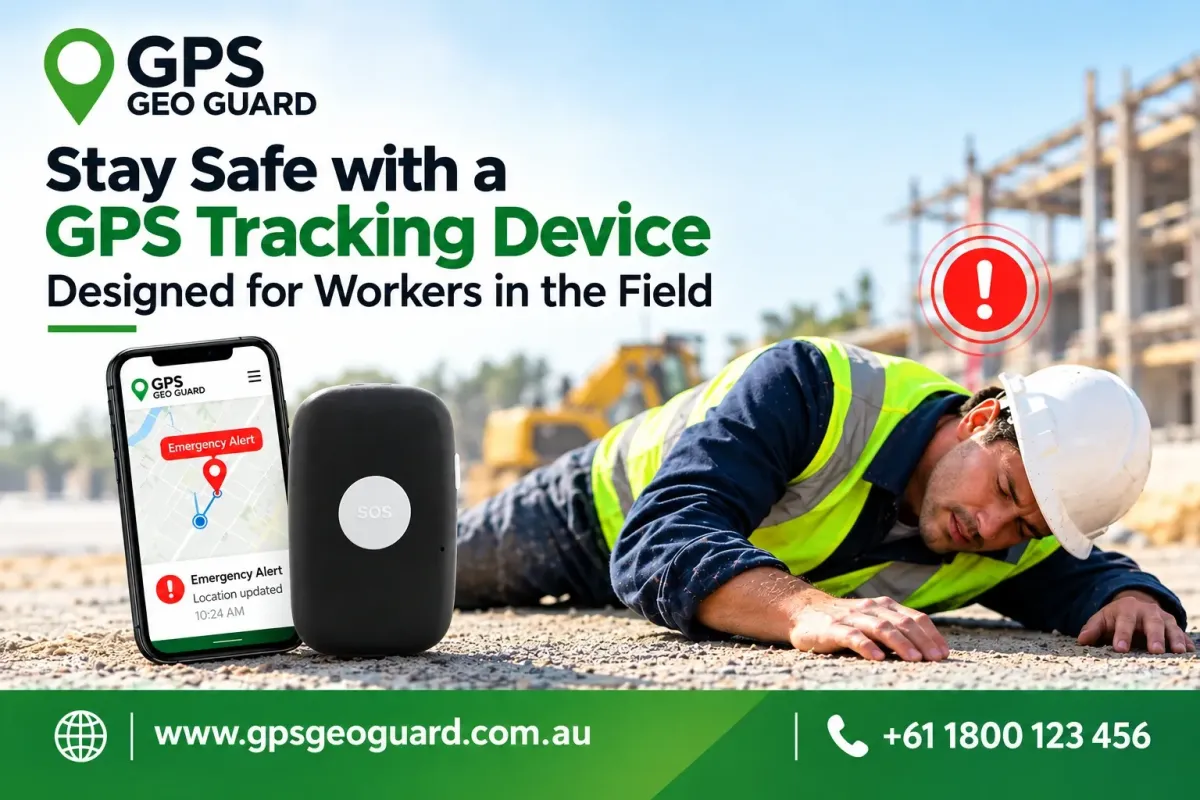
How a GPS Tracking Device Helps During a Worker Emergency
Emergencies don't wait for a convenient moment. They strike without warning, leaving anyone feeling vulnerable and unsure of what to do next. For a worker operating alone, that uncertainty turns into something more specific: there's often no one nearby to notice what's happened, let alone call for help.
This is precisely where a GPS tracking device changes the outcome. It sends location and critical incident details the moment something goes wrong, with no phone call required, no shouting, no one needing to be within earshot at all. That speed protects the worker directly, and it gives the organisation a clear, timestamped record that supports its own safety and compliance standards. For businesses managing lone or high-risk staff, that single stream of data can carry more real-world weight than a policy document ever could.
This blog breaks down how a GPS tracking device responds during a worker emergency and exactly what it adds in the moment a genuine incident occurs.
Understanding the Risks Faced by Lone workers
A lone worker is anyone who carries out their job without a colleague or supervisor present to step in if something goes wrong. In Australia, this applies widely across healthcare visits, utility maintenance, construction sites, and field-based roles, where staff often work alone for long stretches of the day.
Due to the nature of their work, they may be exposed to a variety of risks, including:
Physical accidents and injuries: a fall or equipment failure can turn serious fast when help doesn't come immediately
Assault and workplace violence: public-facing roles like healthcare and security face a real risk of aggression from the people they serve
Sudden medical events: a health condition or a remote location makes a missed episode far more dangerous
When help doesn't arrive quickly in these situations, the outcome can get worse fast, sometimes with life-threatening consequences. That's exactly why reliable safety measures matter and why GPS safety devices have become such a central part of that response.
How Does a GPS Tracking Device Work?
A GPS tracking device works by picking up signals from satellites orbiting the earth. It uses the timing of those signals to calculate an exact location, then sends that location to a monitoring platform along with any alert the device has triggered.
Here’s the basic sequence:
The device receives signals from GPS satellites to calculate its position
Location data transmits over a mobile network to a monitoring centre
Satellite connectivity keeps this working in regional areas with no mobile coverage
BLE-based tracking fills the gap indoors, where GPS signals weaken or drop out entirely
The location updates continuously, so the monitoring centre always has current, accurate data
This is essentially how a GPS tracking system works end to end, positioning on one side, transmission on the other, working together in real time. For a lone worker, this location data becomes critical the moment an alert triggers, since it tells a monitoring centre exactly where to send help.
How a GPS Tracking Device Helps During an Emergency
The real value of a GPS tracking device shows up the moment an alert is triggered. What happens after that is what actually protects the worker. Here's how a device helps during an emergency.
Real-time location sharing
When an alert triggers, whether by button press or automatic detection, GPS sends the worker's exact position to the monitoring centre right away. There's no delay spent figuring out where the alert came from; the location arrives with it.
This makes the biggest difference for workers spread across large or unpredictable areas:
Construction sites, where crews move between zones throughout the day
Utility corridors, where a job could be kilometres from the last known checkpoint
Field-service routes, where every visit is a different address
A monitoring centre without this data is working off a rough guess. With it, first responders get a confirmed point to head towards, and that difference alone can decide how quickly someone gets help.
Faster emergency response times
The greatest strength of a GPS tracking device isn't that help gets called without anyone noticing. It's how fast that call actually happens, and speed is what decides whether help arrives in time to matter.
On GPS Geo Guard's Workforce Duress device, an alert reaches the monitoring centre within seconds (with an average Time to Connect (TTC) of 4 seconds). That speed changes what response actually looks like:
Location arrives with the alert, so there's no back-and-forth to find the worker
Dispatch starts immediately, based on that location alone
Responders travel to a confirmed point, not a guess
In a genuine emergency, every minute changes the outcome. A faster connection means help starts moving almost right away, not several minutes after something has gone wrong.
Integrated with automatic alerts
A GPS tracking device becomes far more effective when it doesn't rely on the worker to act. Automatic alerts close that gap, activating on their own the moment a fall, sudden impact, or extended period of stillness is detected.
A few types of automatic triggers make this possible:
Fall or impact detection, based on sudden changes in motion
Inactivity detection, when no movement is recorded for a set period
Missed check-ins, when a worker fails to confirm safety at a scheduled time
This matters most in the one scenario a manual alarm can't handle: a worker who's unconscious or physically unable to press anything. Automatic detection paired with real-time GPS location for emergencies covers that exact situation, so a rescue can still begin even when the worker can’t ask for one.
Geofencing for risk zones
Geofencing is easy to overlook next to more visible features like SOS buttons or fall detection, but it does real work behind the scenes. It sets a virtual boundary around a specific location, then triggers an alert the moment that boundary gets crossed.
A restricted or hazardous work zone triggers an alert the moment someone enters it
A wandering-risk individual, such as someone in aged care, gets flagged the moment they move outside a designated safe area
A monitoring centre receives the alert immediately, before the situation has a chance to escalate
This is what sets geofencing apart from most other alerts covered so far. It's proactive rather than reactive, catching a risk the moment it starts rather than waiting for an emergency to confirm it.
Reduced dependency on verbal communication
A phone call only works if the worker is conscious, coherent, and able to explain what's happening. GPS tracking doesn't need any of that. Location and alert data transmit automatically, whether the worker can speak or not.
Unconsciousness stops a phone call, not a GPS signal
A worker under active threat may not be safe to speak, but their location still sends
A medical event can silence someone instantly. Location doesn't stop with them
This is what separates a monitored device from a phone. A phone depends on the person using it. A GPS-based system depends only on the alert itself, and that's exactly when it matters most.
The Role of GPS in Compliance and Reporting
A GPS tracking device does more than protect the worker wearing it. It also helps the business behind that worker meet its legal obligations under Australian WHS law.
A written policy on its own rarely satisfies a WHS review. What regulators actually look for is evidence that a safety system works in practice, and GPS tracking provides exactly that:
Every alert creates a timestamped record of location, response, and outcome
That record replaces guesswork or informal notes if an incident is ever reviewed
Ongoing location monitoring shows a system that's actively protecting workers, not one that only exists on paper
For businesses managing lone or high-risk workers, this turns compliance from a document into something they can actually demonstrate. A detailed look at employer responsibilities for lone worker safety covers exactly what regulators expect beyond the device itself.
Conclusion
An emergency doesn't wait for the right moment. It doesn't wait for a worker to be somewhere safe or holding a phone. That's the exact gap GPS tracking is built to close, giving a monitoring centre the one thing a real response depends on: an exact location, sent the instant something goes wrong.
GPS Geo Guard builds that reliability into every layer of the system. Real-time location. Automatic fall detection that doesn't wait for a button press. Satellite backup for the parts of Australia mobile networks still isn’t reached. Paired with 24/7 monitoring and rapid first-responder dispatch, this is what actually shortens the distance between an incident and help arriving. For the business behind that worker, every alert also becomes a timestamped, defensible record, evidence of a safety system doing its job, not a policy sitting untested in a drawer.
For any organisation managing lone or high-risk workers, the real question isn't whether an emergency will happen. It's whether the current setup can find that worker fast enough when it does.
See what real protection looks like. Book a demo with GPS Geo Guard, or request a quote today, and give your workforce a safety system built for the moment it's actually needed.
Frequently Asked Questions (FAQs)
How accurate is a GPS tracking device in an emergency?
GPS accuracy typically ranges from a few metres up to around 15 metres, depending on the surroundings. That's precise enough to guide help directly to the right location.
Do magnets affect GPS tracking devices?
Magnets don't interfere with GPS signal reception or location accuracy, since GPS relies on satellites rather than magnetic fields. They can only affect a built-in compass, not the GPS positioning itself.
Can a GPS tracking device work without a mobile signal?
GPS can calculate location without a mobile signal, but transmitting that data usually needs a network connection. Satellite-based options solve this by keeping devices connected in areas without mobile coverage.
What happens if the device loses battery or signal during an emergency?
Most devices include extended battery life and low-battery warnings, giving enough time to act before power runs out. If signal drops, the last known location is still available to guide a response.
Is a GPS tracking device the same as a duress alarm?
A GPS tracking device provides location data, while a duress alarm is the trigger, manual or automatic, that sends the alert itself. Many safety devices combine both, so the alert and location arrive together.


