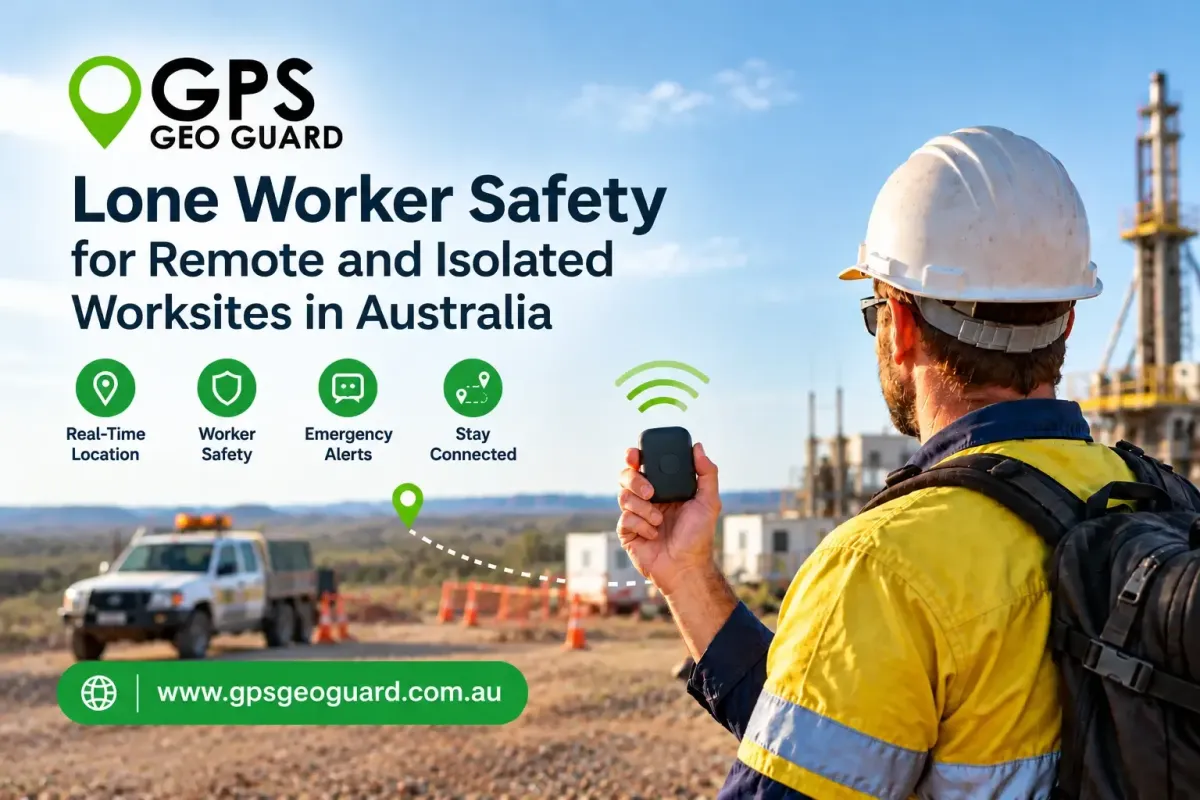
Lone Worker Safety for Remote and Isolated Worksites in Australia
An injury in a city office usually means an ambulance arriving within minutes. An injury on a remote mine site, a rural property, or an isolated construction stretch can mean hours, and that’s before anyone even knows help is needed.
Distance changes the entire safety equation, and most standard workplace safety plans aren’t built around that distance at all. Regional and remote Australia has vast distances, patchy mobile coverage, and long gaps between one worker and the next. A phone is only useful where there's a signal to carry it, and large parts of the country simply don't have that. A check-in system depends on someone noticing a missed call in time to act on it. In a location far from town, both of these can fail exactly when they're needed most.
This blog covers what actually changes for worker safety once isolation and distance enter the picture and what a realistic safety setup for remote and isolated Australian worksites needs to include.
Who Is Considered a Remote or Isolated Worker?
Remote worker safety isn't just about someone working alone. It's about someone working in isolation with no quick way to reach help, whether that's due to distance, terrain, or a lack of mobile coverage.
This applies most directly to:
Construction workers on remote sites, where the nearest colleague can be well out of earshot
Field service and utility workers, travelling between locations across large service areas
Healthcare and community-visit staff, moving between appointments in regional or rural areas
Agricultural and rural property workers, often working across large, isolated stretches of land
What connects all of these roles isn't the job itself; it's the same underlying gap in lone worker safety. Each one puts real distance between the worker and anyone who could respond quickly, which is exactly why isolated worker safety needs to be treated differently from standard workplace precautions.
Common Risks of Working in Isolation
Isolation doesn't create one type of risk. It changes the outcome of whatever risk was already there, whether that's an accident, a violent incident, or a health event.
A few hazard categories show up again and again, regardless of industry:
Physical hazards — falls, machinery accidents, chemical exposure, and manual handling injuries
Violence and abuse — robbery, assault, and abusive clients or members of the public, common in healthcare, retail, and community-facing roles
Environmental hazards — animal attacks, extreme weather, and remote terrain, particularly relevant to agricultural and outdoor field roles
Biological and toxic exposure — needle sticks, infections, and hazardous substances, seen in healthcare and waste-handling work
What changes for an isolated worker isn't the hazard itself. It's what happens next, since the outcome depends entirely on how quickly someone realises help is needed.
What Remote Worker Safety Actually Requires
In Australia, 1 in 3 workers face occupational violence, and slips, trips, and falls account for over 23% of all workplace injuries.
For a remote or isolated worker, a policy documenting these risks doesn't stop them from happening, and it doesn't help once one does. What actually makes a difference is the safety system behind that policy, the tools and processes that respond the moment something goes wrong.
For a remote or isolated worker, that requires a few specific things:
Detection that doesn't rely on the worker — automatic alerts for falls or incapacitation, not just a manual button
A monitoring centre, not just a phone number — trained operators available around the clock to assess and respond
Reliable connectivity, regardless of location — coverage that holds up even where mobile networks don't reach
A documented response process — a record of what happened and how it was handled, supporting WHS compliance
Each of these solves a different point of failure. Skip any one of them: a safety device for the workplace with no coverage, a policy with no monitoring, a monitoring system with no fast response behind it, and the whole setup breaks down exactly when it's needed most.
Safety Devices for Lone Workers
Every hazard and every WHS obligation covered so far leads to the same practical question: what actually closes the gap for a worker with no one else around?
A handful of proven technologies answer that, and most effective setups combine more than one.
Personal alarms / duress alarms
A manual SOS trigger a worker activates during an immediate threat, sending the alert straight to a 24/7 monitoring centre. This is the foundation of most worker duress alarms used across high-risk industries in Australia.
Man down alarms
Automatic detection of a fall or extended inactivity, built specifically for situations a manual alarm can't cover. Man down alarms Australia wide have become standard in industries like construction, healthcare, and utilities.
GPS trackers / lone worker tracking devices
Real-time location data that replaces guesswork with a confirmed point, whether that's outdoors on a job site or indoors using internal tracking technology.
Satellite communication devices
Connectivity that holds up where mobile networks don't reach, essential for remote worker safety devices used on regional and rural worksites.
None of these function as a single fix. A reliable lone worker monitoring setup combines detection, location, and connectivity into one system, so an isolated worker is covered whether the emergency is one they can call out for, one that leaves them unable to act, or one that happens somewhere a phone simply can't reach.
How a Lone Worker Alarm Can Help in Emergency Situations
An emergency doesn't wait for a worker to explain what's happening, and a lone worker alarm is built around that exact fact. Here’s how a lone worker alarm can help in emergency situations.
Alert triggers manually via SOS or automatically through fall and inactivity detection
GPS location transmits with the alert, reaching the monitoring centre in seconds
A trained operator connects through live audio, assessing the situation directly
First responders are dispatched to the confirmed location, with the employer or emergency contact notified at the same time
For a worker with no colleague nearby, this replaces the entire chain a supervised workplace relies on: someone noticing, someone reacting, someone calling for help. One device carries out all three, regardless of whether the worker is conscious, able to speak, or able to reach a phone at all.
How GPS GEO Guard Can Enhance Lone Worker Safety
GPS Geo Guard's system is built around the exact requirements covered above – detection, speed, connectivity, and trained response – combined into one device.
Here's what that actually includes:
Zero false alarms — proprietary fall and inactivity detection built to send alerts only for genuine incidents
4-second connection time — alerts reach a Grade A1 government-certified monitoring centre in seconds, over 70% faster than industry standards
Live and recorded audio — operators assess the situation directly and comfort the worker while help is on the way
Satellite and indoor coverage — connectivity that holds up in remote areas with no mobile signal and indoors using BLE-based tracking
38 years of monitoring experience — trained operators handling workplace violence, medical emergencies, and duress situations as standard practice
Each feature depends on the others to actually work. Detection needs speed behind it. Speed needs a trained operator on the other end. Coverage has to hold regardless of where the worker actually is. Put together, this is what a complete lone worker safety system looks like in practice, not a single device, but every part of the response chain working at once.
See how GPS Geo Guard fits your team. Book a demo or request a quote today.
Frequently Asked Questions (FAQs)
What is the difference between a duress alarm and a man down alarm?
A duress alarm needs the worker to manually trigger it. A man down alarm activates automatically when it detects a fall or inactivity.
How quickly does a lone worker alarm reach a monitoring centre?
Typically within a few seconds. Some leading monitoring services report an average response of around 4 seconds, although actual times vary by provider, technology and network conditions.
Is GPS tracking accurate enough to locate a worker precisely?
Yes, GPS accuracy typically ranges from a few metres up to 15 metres outdoors. Indoor technology like BLE narrows that even further.
What happens if a worker doesn't respond after triggering an alarm?
The operator treats silence as confirmation the situation is serious. Help gets dispatched immediately, based on the alert and location data.
What industries use lone worker alarms the most?
Healthcare, construction, utilities, aged care, and disability services use them most. Any isolated or unsupervised role tends to need one.


