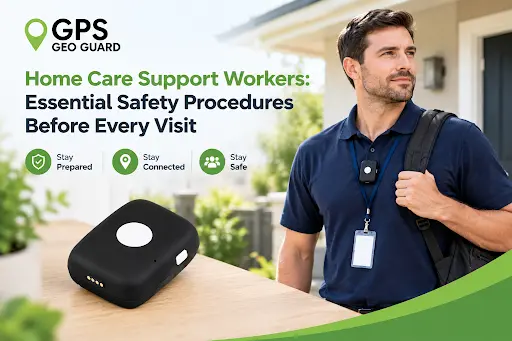
Home Care Support Workers: Essential Safety Procedures Before Every Visit
Home care support workers spend their shifts inside other people’s homes, usually without a colleague or supervisor nearby.
Every address brings different conditions: a new layout, other people in the household, a pet, or a phone signal that may or may not hold. Employers can’t inspect any of this in advance, which makes the minutes before each visit the best chance to spot a problem and plan around it.
This blog breaks down the essential safety procedures a home care support worker should complete before every visit, from reviewing client records to testing a personal safety device. It also covers what employers can build into scheduling to meet their WHS duty of care.
The Importance of a Safe Work Environment
A home care support worker delivers care inside the client’s own home, so the provider can’t control the workplace the way it controls an office. That makes safety planning more important. A safe work environment gives a provider:
Protected workers: fewer injuries from falls, manual handling, and aggression during visits
Better quality of care: a worker who feels safe can focus fully on the client
Higher morale: staff who feel valued and secure are more engaged in their work
WHS compliance: evidence that the employer’s duty of care is being met
Lower costs: fewer compensation claims, less downtime, and less rehiring and retraining
What Is a Home Care Support Worker?
A home care support worker helps people with personal care and everyday tasks in their own home. Their clients include older Australians and people with disability, along with anyone else who needs support at home. Most work for a provider, as an employee or contractor, and many employers expect or require a Certificate III in Individual Support. Job titles vary, and a home support care worker may also be called a home care worker, in-home support worker, or community support worker.
A typical visit can include:
Personal care, such as showering and dressing
Mobility support
Meal preparation and household tasks
Medication assistance
Transport to appointments and community activities
Emotional support and companionship
Each of these tasks happens inside the client’s home, usually with no other staff present. That is why an in-home care support worker needs a safety routine they can repeat before every visit.
Risks Faced by Home Support Workers
A home care support worker carries out physical, personal tasks in a space the provider doesn’t control. An Australian report found that 69% of home care workers had felt unsafe in a client’s home. The main risks fall into six groups:
Aggression and occupational violence: from clients or other people in the home
Manual handling injuries: from lifting, repositioning, and assisting with personal care
Slips, trips, and falls: from wet bathrooms, clutter, and unfamiliar layouts
Infection exposure: from close contact during personal care
Travel risks: from driving between homes, often alone and sometimes after dark
Working alone: with no colleague present to notice an incident
Each of these can be reduced by what a worker checks and sets up before the visit begins.
Essential Safety Procedures Before Every Visit
A home care support worker can’t inspect a client’s home in advance, but six checks completed before the visit cover the main risks: the client’s risk flags, who is in the home, the route, phone coverage, a check-in plan, and a working safety device.
Review Client Records and Risks
The client record is a key source of safety information before a visit, including risk flags, incident history, and care needs. Reading it takes a few minutes and shows a home care support worker what has already been recorded about the client and the home.
The risks to look for include:
Recorded aggression or known triggers
Incidents reported on earlier visits
Tasks that may need extra equipment, such as manual handling
Contagious conditions that call for gloves or a mask
Log the Visit Details
A logged visit tells the provider where a home care support worker should be and when. If a visit runs over or a worker can’t be reached, the coordinator knows which address to check first.
Each visit should be logged with:
The client’s address
The expected start time
The expected duration
Check Household Hazards
Some household hazards show up before the visit, either in the client record or during the call to confirm the appointment. Knowing about them early lets a home care support worker plan around them instead of finding them halfway through the visit.
Things worth checking:
Pets, especially dogs, and whether they can be kept away during the visit
Who else will be in the home
Slippery bathroom floors and other wet areas
Clutter, loose items, and open cupboards that cause trips
Where the exits are, noted before going in
Check Phone Coverage and Route
A phone call for help only works with a signal, and help only arrives if someone knows where the worker is. Checking coverage and the route before leaving tells a home care support worker whether a call will connect at the address and how to reach it safely. This matters most for a new client or a regional area.
Things to check:
Whether there is mobile coverage at the client’s address
Detailed directions to a new client’s home
That the vehicle is in good working order with enough fuel
Where to park so leaving quickly is easy
Who to call if the area feels unsafe on arrival
Set a Safety Check-In
A check-in gives the provider a time to expect contact from a home care support worker. If that time passes without word, the coordinator knows to follow up. It works best when it’s set before the visit starts, with the worker’s expected finish time already logged.
A check-in can take a few forms:
A safety timer set for the length of the visit
A text or quick call to the coordinator at an agreed time
A message to the agency when the worker plans to leave or has left
Test Your Safety Device
A safety device only helps if it works when needed, so a home care support worker should confirm it before each visit. Testing takes a minute and removes the chance of finding a dead or disconnected device during an incident.
Things to check:
The device is charged and switched on
It’s connected and working, following the provider’s test instructions
It’s worn where it can be reached quickly, not packed away in a bag
How Personal Safety Devices Support Home Care Support Workers
The pre-visit checks prepare a home care support worker, but a safety device is what responds during the visit when a phone call or check-in can’t. Geo Guard Duress is a wearable built for lone workers, and it gives a worker several ways to get help:
One-press SOS: a workforce duress alarm raises the alert during aggression or a medical emergency
Automatic fall detection: a man down duress alarm sends the alert when a worker is hurt and can’t press anything
GPS location: the monitoring centre sees where the worker is, including at a new client’s address
Live and recorded audio: an operator can assess the situation before help is dispatched
Once an alert is sent, it follows a set alarm escalation process:
Detection: the device sends the alert
Emergency communications centre: a trained operator receives it through 24/7 emergency monitoring
Dispatch: help is sent to the worker’s location
First responder response: responders arrive and assist
Event closure: the incident is closed once the worker is confirmed safe
Conclusion
Pre-visit checks can only flag the risks that someone has already recorded or can see in advance. A fall, a sudden change in a client’s behaviour, or a medical event during care can’t be planned for, and that’s the point where a home care support worker needs more than a phone or a scheduled check-in. GPS Geo Guard’s alert goes to a 24/7 monitoring centre run by a team with 38+ years in emergency monitoring, with GPS location and live audio attached, so an operator can assess the situation and send help. Providers who pair a clear pre-visit routine with this kind of response are in a stronger position to show their WHS duty of care is being met.
Equip your home care support team with a workforce duress alarm and 24/7 monitoring. Book a demo or request a quote from GPS Geo Guard today.
Frequently Asked Questions (FAQs)
What is the difference between a home care support worker and a disability support worker?
The titles overlap, and many workers hold the same Certificate III in Individual Support. Home care usually points to support for older people at home, while disability support points to people with disability, often funded through the NDIS.
Are home care support workers considered lone workers?
Yes, when no colleague is nearby to give immediate help. Most home visits fit, because the worker is usually the only staff member in the home.
What should a home care support worker do if they feel unsafe during a visit?
Leave the home if it’s safe to do so, then contact the coordinator and follow the provider’s procedure. In immediate danger, press the duress alarm or call 000.
Who is responsible for a home care support worker’s safety?
The employer holds the primary duty under Australian WHS laws to keep workers safe so far as is reasonably practicable. Workers must also take reasonable care for their own safety and not put others at risk.
Should a home care support worker carry a personal safety alarm?
Yes. Safety guidance recommends one for lone work, worn where it can be reached quickly, and a model with fall detection also protects a worker who can’t press the button.


