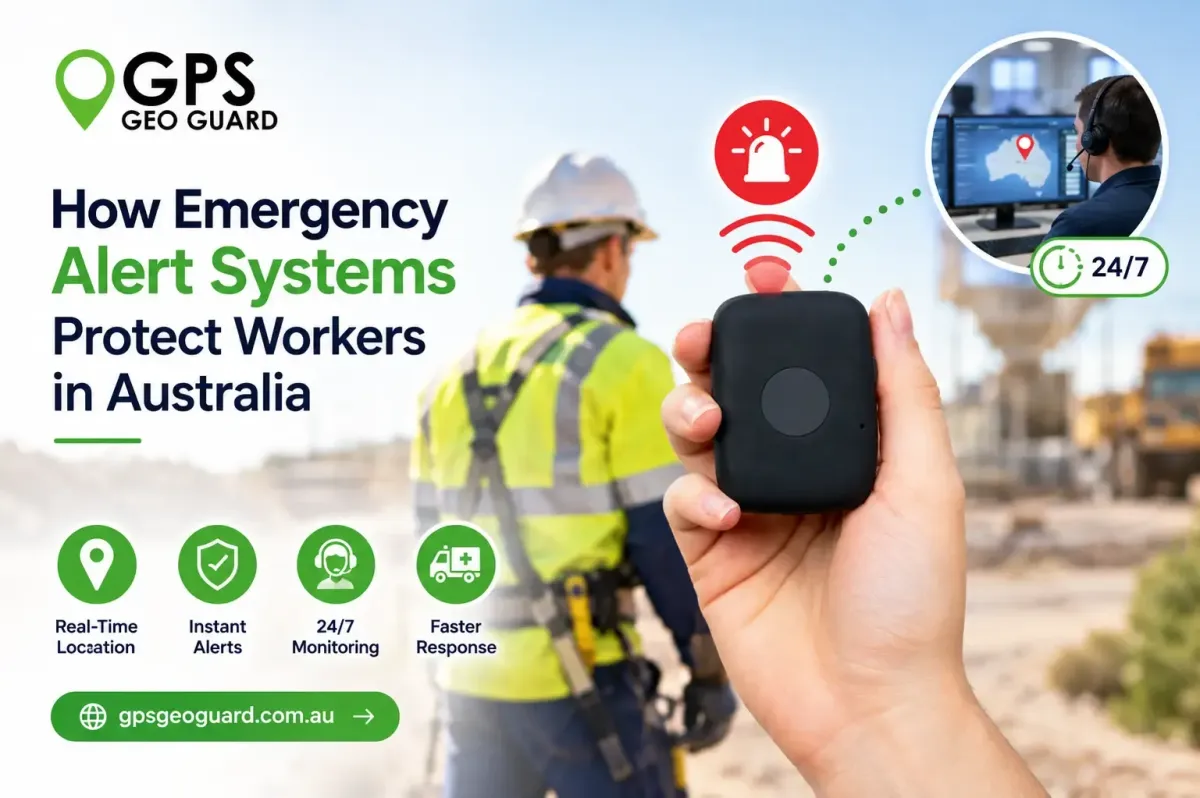
How Emergency Alert Systems Protect Workers in Australia
Australia records thousands of workplace injuries every year, and a significant share happen to workers with no one nearby. Being alone at the moment something goes wrong changes the entire trajectory of an incident.
An emergency alert and monitoring system changes that equation for organisations and lone workers operating in high-risk roles. It connects a worker directly to a monitoring centre using GPS location, automatic incident detection, and trained operators available around the clock, so response no longer depends on someone happening to notice.
This matters most for organisations managing lone or high-risk staff, where supervision simply isn't possible for every hour of every shift. The real problem these emergency alert systems in Australia solve isn't willingness to help. It's the time between an incident occurring and someone finding out it happened at all.
What Happens When a Worker Faces an Emergency Alone?
In 2024, vehicle incidents caused 42% of Australian workplace deaths and falls from height caused 13%, according to Safe Work Australia, making them the two leading causes of fatal workplace injury in the country. Neither figure reveals how many of those workers were alone at the time, but it’s a fair question, because being alone changes what happens after.
For a lone worker, a manageable situation becomes stressful when
No one is nearby to help: Without a colleague present, a collapse or injury can stay undetected until the next scheduled check-in.
They may be unable to call: A serious injury, a seizure, or a threatening situation can physically prevent someone from reaching for a phone or speaking at all.
Their location is unknown: A large job site, a rural property, or a rotation of home visits rarely comes with one fixed address to direct help towards.
Help may be delayed: Each of the problems above adds time between the incident and a response, and for a serious injury, that delay directly affects the outcome.
Lone Worker Hazards That Make Emergency Alerts Necessary
Lone worker hazards vary by industry, but they tend to fall into a consistent set of categories. Recognising these is the first step towards understanding why a safety alert system, rather than a phone or a check-in call, has become necessary for workers operating without direct supervision.
Physical hazards — falls, equipment or machinery incidents, and exposure to hazardous materials
Medical emergencies — pre-existing conditions or sudden events like seizures and cardiac episodes
Violence and assault risk — public-facing roles such as healthcare, security, retail, and community services
Environmental and remote-site hazards — extreme weather, difficult terrain, and areas with no mobile coverage
Vehicle-related risk — field-based and driving roles, where transport incidents remain a leading cause of workplace fatality in Australia
Each of these hazards carries a different cause, but the same consequence: a worker facing a dangerous situation with no one immediately available to respond.
How Emergency Alert Systems Work & Protect Workers
An emergency alert system works on a defined sequence: an incident is detected, a signal reaches the monitoring centre, and a trained operator takes over from there. GPS Geo Guard's alarm escalation process follows exactly this structure, moving from detection to dispatch without depending on the worker to explain anything themselves.
This is what actually protects a worker against the hazards covered above. A fall that leaves someone unconscious still gets flagged and located through automatic detection. A threatening situation that makes speaking unsafe still sends a signal, without a word needing to be said. Backed by 24/7 emergency monitoring, the system doesn't wait on the worker to do anything beyond wearing the device.
Detects the incident, manually through an SOS button or automatically through fall detection
Sends the worker's exact GPS location along with the alert
Connects a trained operator through live two-way audio, where the device supports it
Dispatches first responders and notifies the employer or emergency contact
Types of Alerts (SOS/panic, man down, duress)
Not every emergency looks the same, so an effective personal emergency alert system needs more than one way to respond. Different situations call for different triggers, and emergency alarm devices are built around that distinction.
SOS/Panic Alerts — triggered manually when a worker presses the device during an immediate threat or emergency, functioning as a direct emergency alarm the moment it's needed
Man Down Alerts — triggered automatically through fall or inactivity detection, covering situations where the worker can't press anything themselves; this is the core function of a man down monitoring system.
Duress Alerts — sent discreetly when a worker is in a situation they can't safely speak about, allowing help to be requested without alerting anyone nearby
Each alert type reaches an authorised monitoring centre (working 24/7). Together, these three alert types cover the full range of what a lone worker might face, an emergency they can call out for, one that leaves them unable to act at all, and one they need to handle quietly.
Key Features of a Reliable Emergency Alert System
A reliable emergency alert system comes down to a specific set of capabilities, working together rather than functioning as separate add-ons. These are the features that actually decide whether a system performs when it matters.
Automatic incident detection — identifies a fall or period of inactivity without needing the worker to press anything, the same principle behind a man down monitoring system.
24/7 monitoring with trained operators — a real person assesses every alert, at any hour, through continuous emergency monitoring rather than an automated queue.
Fast connection speed — alerts should reach the monitoring centre within seconds, so response begins almost immediately.
Accurate location tracking — GPS handles outdoor positioning, with BLE covering indoor environments where GPS signal weakens.
Live two-way audio — lets an operator assess the situation directly and comfort the worker while help is on the way.
Why Businesses in Australia Need Emergency Alert Systems
WHS law places a duty of care on every employer, and that duty doesn't pause the moment a worker is out of sight. A lone or remote role carries the same legal obligation as any supervised position; the difference is there's no colleague nearby to help meet it in the moment.
What that obligation actually requires in practice, from risk assessments to ongoing monitoring, is laid out in detail in GPS Geo Guard's guide to employer responsibilities for lone worker safety.
An emergency alert system turns that obligation into something a business can actually demonstrate:
Every alert creates a timestamped record, useful evidence during a WHS audit or internal review
A functioning safety system makes isolated or high-risk roles easier to staff with confidence
Faster response reduces how severe a workplace injury becomes once it's underway
Meeting a legal duty is one thing. Being able to show exactly how it's met, with a clear record rather than a policy statement, is what separates a business that's compliant on paper from one that's actually protecting its people.
Conclusion
An emergency alert system in Australia works because it solves one specific problem: getting someone to know help is needed, without depending on the worker to make that happen themselves. GPS location, automatic detection, and trained monitoring work together to make that possible, even when the worker can't act at all.
For businesses managing lone or high-risk staff, this isn't a box to tick. It's the mechanism that turns a duty of care into something demonstrable, and it's what stands between a worker in trouble and help that arrives in time to matter.
Book a demo with GPS Geo Guard, or request a quote to put a proper emergency ala
rm and 24/7 monitoring system in place for your team.
Frequently Asked Questions (FAQs)
What is an emergency alert system?
An emergency alert system allows a worker to send an SOS or panic alert to an Alarm Receiving/Monitoring Centre for immediate assistance.
How is an emergency alert system different from a regular phone call for help?
It is designed specifically for emergencies and can automatically send information such as the worker’s identity and location, while a normal phone call may require the worker to explain the situation.
How quickly does an emergency alert reach a monitoring centre?
Alerts are designed to be transmitted rapidly, but there is no universal time because it depends on the device and network; some monitoring centres answer within seconds.
Can an emergency alert system work in areas without mobile coverage?
Yes, if the system uses alternatives such as satellite communication, satellite devices are specifically used in areas with little or no cellular coverage.
What happens if a worker accidentally triggers a false alert?
The monitoring centre normally verifies the alert with the worker, and if it is confirmed as accidental, the response can be stood down.


