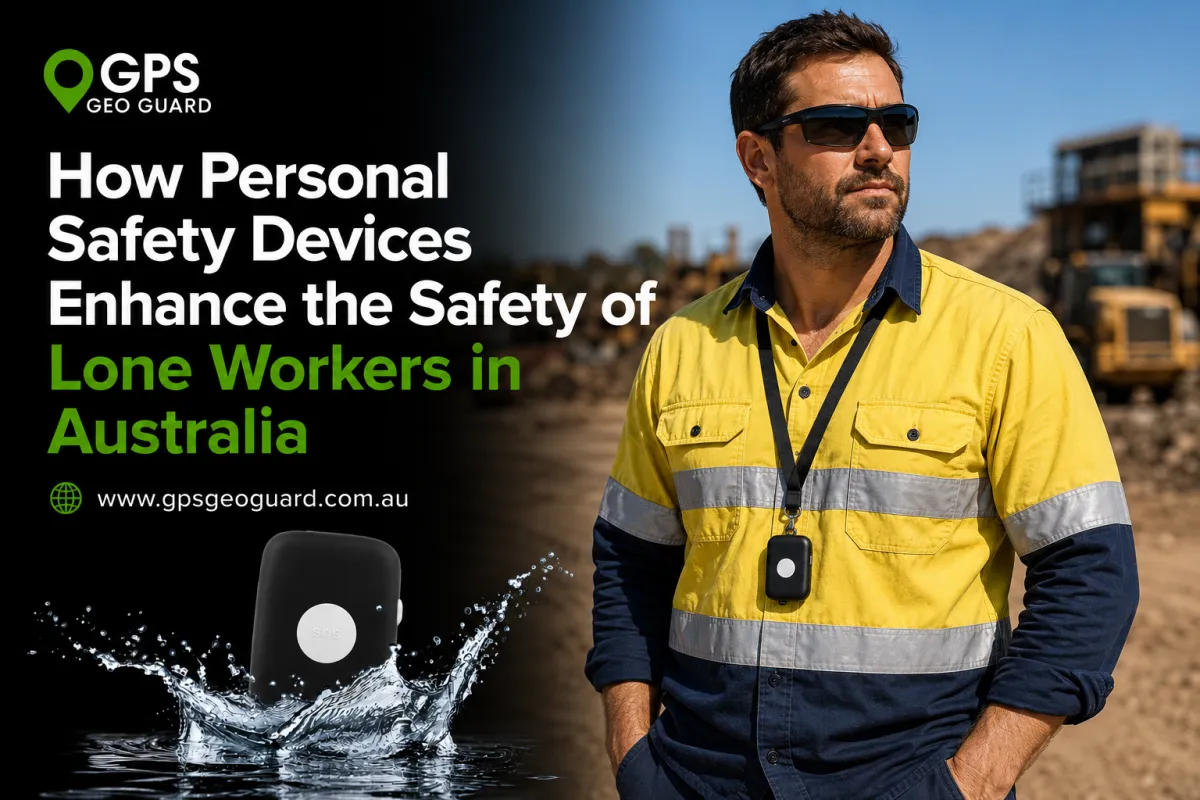
How Personal Safety Devices Enhance Lone Worker Safety in Australia
Every day, thousands of Australians go to work alone. The real estate agent showing a property after hours. The construction worker on a remote site with the nearest colleague out of earshot. The council employee, the logistics driver, anyone interacting with clients or members of the public.
Most of these lone workers do have a mobile phone. A few have a check-in system that nobody monitors closely enough. But rarely do all of them have a robust safety system. When something goes wrong, the outcome comes down to one thing: how fast help arrives. Australia makes that harder than most places. Because distances are vast. Mobile coverage drops out in more locations than most employers realise. And sometimes, emergency response times in remote areas can be long.
That gap between an incident and a response is where lone workers are most vulnerable. This is where personal safety devices for lone worker safety in Australia can help close that gap.
The Biggest Risks Facing Lone Workers in Australia
Lone worker risk does not look the same across every industry. But the consequences of getting it wrong do.
Every industry that relies on workers operating alone or away from immediate support can expose employees to unpredictable risks. The greater the distance between a lone worker and their colleagues, supervisors, or emergency support, the more important it becomes to have a reliable way to raise an alert, communicate their location, and receive help when something goes wrong.
Why Mobile Phone Is Not Always Enough
A mobile phone can be an important communication tool, but it may not provide every function required to protect a lone worker.
During an emergency, a worker may be unconscious, injured, unable to reach their phone or unable to make a call. Mobile coverage can also be unreliable in some remote, regional, underground or enclosed work environments.
Dedicated lone worker safety devices can provide additional capabilities such as SOS activation, GPS location tracking, man-down detection, emergency communication and professional monitoring, depending on the device and service selected.
The objective is not necessarily to replace a mobile phone, but to provide a safety solution designed specifically around the risks of working alone.
What Are Personal Safety Devices for Lone Workers?
Personal safety devices for lone workers are dedicated devices or technology solutions designed to help protect employees when they work without immediate access to colleagues or supervisors.
Depending on the solution, a device may allow a worker to:
Activate an SOS or duress alert
Share their location
Communicate with a monitoring team
Trigger an emergency response
Receive assistance during an incident
Use automatic detection features such as man-down or fall detection
The right device depends on the worker's environment, job responsibilities, level of risk and available communication networks.
For example, a real estate agent working alone at a property may need discreet duress activation, while a worker in a remote area may require a solution that supports communication beyond standard mobile coverage.
Types of Personal Safety Devices and How They Support Safety
There are many different types of lone worker safety devices in Australia. But not all of them work the same way, nor are they built for the same situations.
Here at GPS Geo Guard, we have spent 38 years protecting lone workers across Australia — from construction sites and council services to logistics, retail, government, and every industry that puts people out in the field alone. We know what happens when the right system is in place, and we know what happens when it is not.
Here are the devices that are making a real difference for lone workers across Australia.
Man Down Alarm and Fall Detection Devices
With lone worker falls, the danger is rarely the fall itself. It is the time that passes before anyone knows it happened. GPS Geo Guard's man down alarm can detect when a worker stops moving and trigger an alert automatically, including when the worker may be unable to activate an alarm themselves.
Satellite Communicators
There are parts of Australia where mobile coverage simply does not exist. For workers in mining, agriculture, construction, and utilities, GPS Geo Guard's satellite solution ensures an alert gets through regardless of location or terrain. When the nearest emergency service is an hour away, that connection is what determines the outcome.
Workforce Duress Alarms
When a situation turns threatening, there is no time to unlock a phone. One press, and GPS Geo Guard's monitoring team is already listening through live audio, tracking the worker's location, and getting first responders moving. For retail staff, real estate agents, council workers, and anyone working face to face with the public, that response time is everything.
GPS Tracking and Real-Time Location
Every second spent locating a worker is a second not spent helping them. GPS Geo Guard's real-time location and breadcrumb tracking mean the monitoring team knows exactly where the worker is the moment an alert is triggered, giving first responders precise information without delay.
24/7 Professional Emergency Monitoring
A lone worker safety solution or a device is only as good as what happens when it activates. GPS Geo Guard's Government-certified A1 R1-A monitoring centre has a trained team available every hour of every day. They manage the entire incident, from the first alert to the final all-clear, until everyone is safe.
How Personal Safety Devices Improve Lone Worker Safety
The value of a lone worker safety device becomes most apparent when an employee is working without immediate support.
Consider a construction worker finishing a task at an isolated site. If they suffer a fall and cannot reach their phone, automatic detection may provide a way to raise an alert.
A real estate agent showing a property alone may face a threatening situation and need to discreetly activate a duress alarm.
A logistics driver working alone may require location-based assistance after a vehicle incident.
A utility worker operating in a remote area may need a communication solution that works beyond standard mobile coverage.
These examples demonstrate why there is no single device that is suitable for every lone worker. The solution should be matched to the worker's environment, risk profile and communication requirements.
Personal Safety Devices and Lone Worker Safety in Australia
Personal safety technology should form part of a broader lone worker risk-management strategy rather than being treated as the only control.
Businesses should consider the hazards associated with working alone, assess the level of risk and establish appropriate procedures for communication, check-ins and emergency response.
A personal safety device can support these procedures by giving workers a dedicated way to raise an alert and, depending on the technology, share their location or communicate with a monitoring team.
Australian organisations should therefore consider both the technology and the wider safety process when developing their approach to lone worker protection.
How to Choose the Right Personal Safety Device
The best personal safety device depends on the worker and the environment rather than simply the number of features available.
Before selecting a solution, businesses should consider:
Where does the worker operate?
Determine whether the work takes place in an office, public environment, remote location, construction site or other isolated area.Is mobile coverage reliable?
Workers in remote or regional areas may require additional connectivity options.Could the worker become incapacitated?
If falls or medical emergencies are possible, automatic detection may be valuable.Does the worker need discreet emergency activation?
Customer-facing workers may benefit from a simple duress activation method.Is professional monitoring required?
Consider who will respond when an emergency alert is received.How will alerts be escalated?
Businesses should have a clear process for assessing alerts and contacting appropriate assistance.Is the device practical for everyday use?
Employees are more likely to use technology correctly when it is comfortable, reliable and easy to operate.Does the solution fit the organisation's existing safety procedures?
The technology should complement the organisation's broader lone worker risk-management approach.
How GPS Geo Guard Supports Lone Worker Safety
GPS Geo Guard provides personal safety and lone worker solutions designed to support employees working across a range of Australian environments.
Depending on the selected solution, businesses can access capabilities such as GPS location tracking, duress alerts, man-down detection, emergency communication and professional monitoring.
GPS Geo Guard has been supporting Australian organisations for 38 years across industries including construction, council services, logistics, retail, government and field-based work.
The important consideration is not simply having a device. Businesses need a complete process that connects the worker, the safety technology, monitoring personnel and the appropriate emergency response.
To understand which solution is appropriate for your workforce, speak with the GPS Geo Guard team about your workers, operating environment and safety requirements.
Read More: How GPS Geo Guard Can Help Your Business Comply with Lone Worker Safety Regulations
Conclusion
Technology has made it possible for lone workers across Australia to stay connected and protected, no matter where the job takes them. The right lone worker safety solution or device does not add to a worker's day. It sits quietly in the background, and when it is needed, it works.
For businesses, that peace of mind is worth more than any policy document. For workers, it means showing up knowing that if something goes wrong, someone will know, and help will come.
That is what GPS Geo Guard has been delivering for 38 years with personal safety devices for lone workers. Do not wait for an incident to find out if your system is good enough. Book a demo with the GPS Geo Guard team today and see exactly what real lone worker protection looks like.
Frequently Asked Questions (FAQs)
Q1. What is the best lon6e worker safety device for remote areas in Australia?
A device with satellite connectivity is essential where mobile coverage drops out. GPS Geo Guard's satellite solution ensures lone worker safety alerts get through regardless of location or terrain.
Q2. What happens when a lone worker safety alert is triggered?
The moment an alert is triggered, GPS Geo Guard's monitoring team responds immediately, tracks the worker's location, and despatches first responders through a priority system until everyone is confirmed safe.
Q3. How does man-down detection work for lone workers?
It monitors movement automatically. If movement stops unexpectedly, an alert triggers without the worker needing to press anything — critical when a worker is unconscious or incapacitated.
Q4. What industries in Australia need lone worker safety devices?
Any industry where employees work alone or without direct supervision. GPS Geo Guard protects workers across construction, council services, logistics, retail, utilities, aged care, government, and anyone working face to face with clients or members of the public.
Q5. How quickly can GPS Geo Guard be set up for our workforce?
Setup is straightforward with no capital outlay required. The monitoring team is available from day one regardless of your organisation's size.


