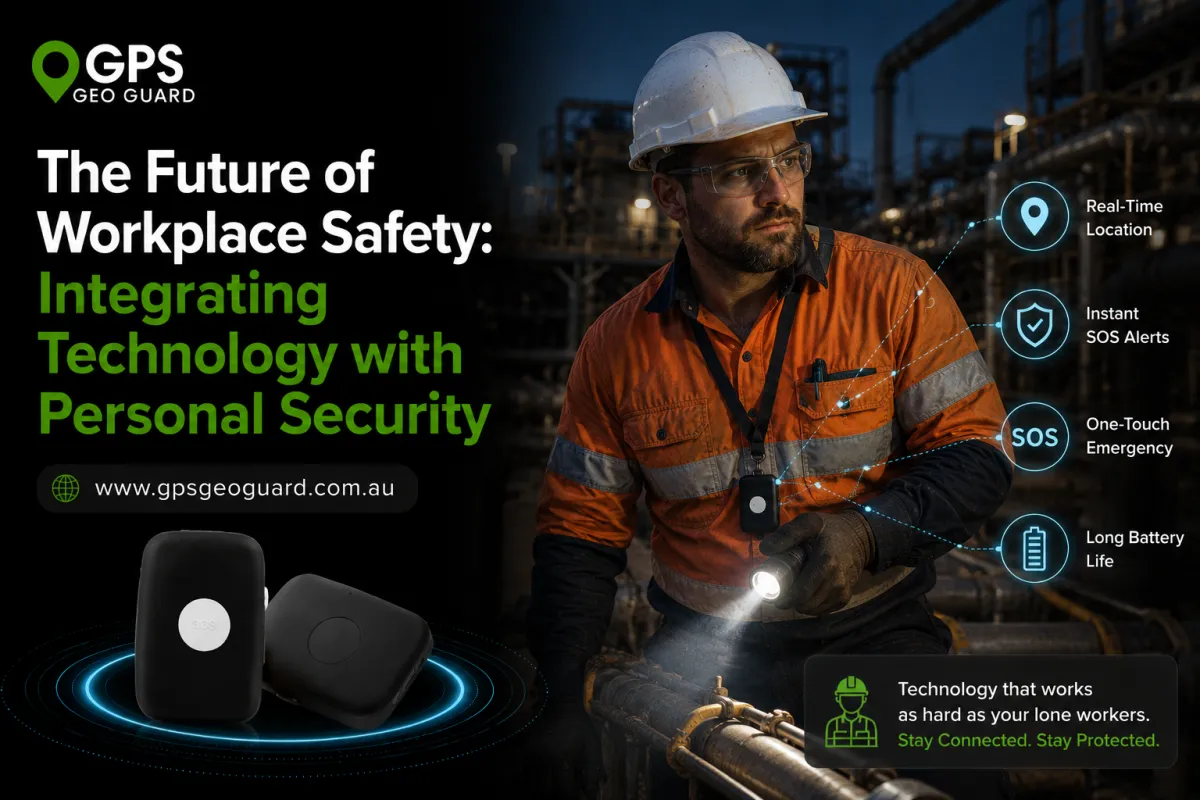
Future of Workplace Safety: Integrating Technology with Personal Security
Australian employers have never faced more scrutiny over how they protect their people. Workforce models have changed. Workers are more dispersed, more mobile, and more frequently operating without a colleague in sight. The risks that come with that reality, occupational violence, medical emergencies, falls in isolated locations, have not waited for organisations to catch up.
What has changed is the standard being applied to how those risks are managed. The organisations that understand this are not waiting for an incident to expose the gaps in their systems. They are asking harder questions about what genuine protection actually requires, not just what a policy document says but what happens in the seconds after something goes wrong.
This blog covers exactly that. What technology has changed. What the law now demands. What a safety system or personal safety devices for lone workers that actually works looks like when it is tested and more
A Safety Policy Is Not a Safety System
Most Australian businesses have a safety policy. It documents the risks, outlines the obligations, and sits in a folder that gets reviewed once a year. For many organisations, that document is the entirety of their lone worker protection strategy.
The problem is not that the policy is wrong. The problem is that a policy cannot do anything when a worker is on the floor and cannot reach their phone.
Under Australian WHS legislation, the legal standard is not whether a business has documented its intentions. It is whether a business has done everything reasonably practicable to protect its workers. Those are not the same thing. And what they need is a safety system, not just policy.
They need functioning lone worker safety devices like Workforce Duress Alarms that identify who is working alone and maintain real-time communication. They need something that has a defined escalation process that activates the moment something goes wrong. Because when regulators investigate a serious incident, they are not reading the policy document. They are asking what was actually in place and whether it worked.
What Technology Has Changed About Emergency Response
The moment a worker is incapacitated, every second without a response is a second the situation gets worse. The systems most businesses rely on were never built to handle that moment effectively.
Technology has closed that gap in ways that are now operationally measurable and legally relevant.
From reactive to automatic
Modern personal safety devices like Duress Alarms for workers no longer wait for the them to act. Man-down and fall detection monitor movement continuously and trigger an alert automatically when a worker is incapacitated. If the worker cannot press a button, the system still activates.
From approximate to precise
Personal safety devices with GPS tracking deliver real-time location data the moment an alert is triggered. Emergency responders are not searching. They are responding to a confirmed location with breadcrumb tracking that shows exactly where the worker has been and where they are now.
From one-way to two-way
Live audio changes everything about how an incident is managed. A monitoring operator can hear what is happening, speak directly to the worker, and make informed decisions about the response required. That is not a feature. That’s the difference between a controlled response and a guesswork one.
From notification to response
An alert sent to an unmonitored inbox is not a safety system. A Government-certified 24/7 monitoring centre that connects to a live operator in seconds, dispatches first responders through a priority system, and manages the incident until it is closed.
When the right technology is integrated correctly, the question stops being whether someone will notice. It becomes how fast the right people are already moving.
The Difference Between an Alert and a Response
Many businesses believe they have a lone worker safety system in place. What they actually have is an alert mechanism.
A personal safety alarm device tells someone that something may have gone wrong. A response does something about it. A mobile app that notifies a manager’s phone means nothing if that manager is in a meeting or does not see the message in time. A genuine response system has a live operator connected within seconds, a defined escalation protocol that does not depend on anyone being available, and complete incident accountability from the moment the alert triggers to the moment everyone is confirmed safe. That is not a faster alert. That is a fundamentally different system.
What a Fully Integrated Safety System Actually Looks Like in Practice
A fully integrated lone worker safety solution is not a collection of separate tools. It is a connected sequence that moves from detection to response to resolution without gaps or assumptions.
It starts with a dedicated device. Not a mobile phone app that competes with notifications and depends on the worker remembering to activate it. A purpose-built personal safety device with automatic fall detection, GPS tracking, and live audio that is always active and always ready.
When something goes wrong, the Staff Duress device does not wait for the worker to act. It triggers automatically, connects to a Government-certified 24/7 monitoring centre, and puts a live operator on the situation within seconds. That operator has the worker's real-time location, can hear what is happening, and follows a defined escalation protocol — first responders are dispatched, managers are notified, and the incident is managed end to end until everyone is confirmed safe.
GPS Geo Guard operates exactly on this model across healthcare, government, disability services, aged care, logistics, and retail. Over 7,000 organisations across Australia rely on it not because it is the most complicated system available, but because it works reliably when it is needed most.
That is what genuine integration looks like. Every component connected, every step defined, and no moment where the outcome depends on someone happening to notice.
What Non-Compliance Costs Beyond the Fine
When a serious lone worker incident occurs, the fine is usually the first number that gets cited. It is rarely the largest one, and it is never the most consequential.
Legal costs from investigations, regulatory hearings, and civil liability claims that can run far beyond any initial penalty
Workers’ compensation costs that rise sharply after a serious incident
Business insurance that does not cover WHS breaches, meaning every dollar spent defending or settling comes directly from the business
Reputational damage that affects client relationships, recruitment, and public perception long after the incident itself
Operational disruption while investigations are conducted and systems are overhauled under regulatory pressure
What sits behind those numbers is harder to measure but more permanent. A worker who was injured alone, without help reaching them in time, represents a failure that the business will carry long after the regulatory process concludes.
The people who worked alongside that person carry it too. No compliance framework, no settlement figure, and no policy update retroactively changes what happened or why.
The businesses that understand this do not treat lone worker safety as a cost to manage. They treat it as a responsibility that was always there.
What a Future-Ready Organisation Does Differently
The organisations that are ahead of this are not responding to incidents. They are not scrambling to meet new obligations after a regulatory update. They made a decision, at some point before anything went wrong, that the standard they would hold themselves to was higher than the minimum the law required.
That decision shows up in how they build their systems:
They treat lone worker safety as a live operational responsibility, not an annual policy review. Their systems reflect the actual conditions their workers face, conditions that change as workforces become more dispersed, more mobile, and more frequently isolated.
They were already managing psychosocial risk before it became enforceable. Regulatory changes in 2025 and 2026 have elevated psychosocial safety from a consideration to a legal obligation across all jurisdictions. Future-ready organisations understood that prolonged isolation and occupational violence carry psychological consequences within their duty of care before the law caught up.
They have already embedded the technology that matters. Real-time GPS monitoring, automatic man-down detection, geofencing, two-way audio, and 24/7 monitored response are not upgrades; they are evolving. They are the foundation everything else is built on.
They are watching where technology is heading and positioning accordingly. AI-powered safety platforms combining biometrics, wearables, and predictive analytics for real-time emergency detection are emerging globally. Organisations already operating with integrated monitoring infrastructure are positioned to adopt what comes next. Those still relying on a mobile phone and a check-in policy are not.
The organisations that get this right do not look back at an incident and ask what they should have done. They already know the answer because they built the system before they needed it.
Conclusion
Most businesses do not discover the gaps in their lone worker safety until something goes wrong. By that point, the regulatory, financial, and human costs are already in motion. The question every safety manager and business owner should be asking right now is not whether their policy is documented. It’s whether their system would actually work in the seconds after something goes wrong.
GPS Geo Guard has spent 38 years working with businesses across Australia to close exactly that gap. Over 7,000 organisations across Australia trust that system because it works when it matters most. If your current lone worker safety system would not hold up under scrutiny, it is not a system. It is a risk you are carrying on behalf of the people who work for you.
Talk to the GPS Geo Guard team today and find out what a system that actually works looks like for your organisation.
Learn More: How GPS Geo Guard Can Help Your Business Comply with Lone Worker Safety Regulations
How Personal Safety Devices Enhance the Safety of Lone Workers in Australia
Frequently Asked Questions (FAQs)
1. Does a written safety policy satisfy our WHS duty of care?
No. A policy documents intentions. Australian WHS law requires functioning control measures, not documented ones.
2. What is the difference between a lone worker app and a dedicated safety device?
An app depends on the worker being able to act. A dedicated device with automatic man-down detection activates even when they cannot.
3. Who qualifies as a lone worker?
Any worker without a colleague nearby or in sight. The risk does not require a remote location or a specific industry.
4. Can business insurance cover WHS fines?
No. WHS penalties cannot be insured against. Every dollar spent on fines, legal costs, and settlements comes directly from the business.
5. What happens after a GPS Geo Guard alert is triggered?
A live operator connects within 5 to 7 seconds, confirms the situation, dispatches first responders, and manages the incident until everyone is confirmed safe.


