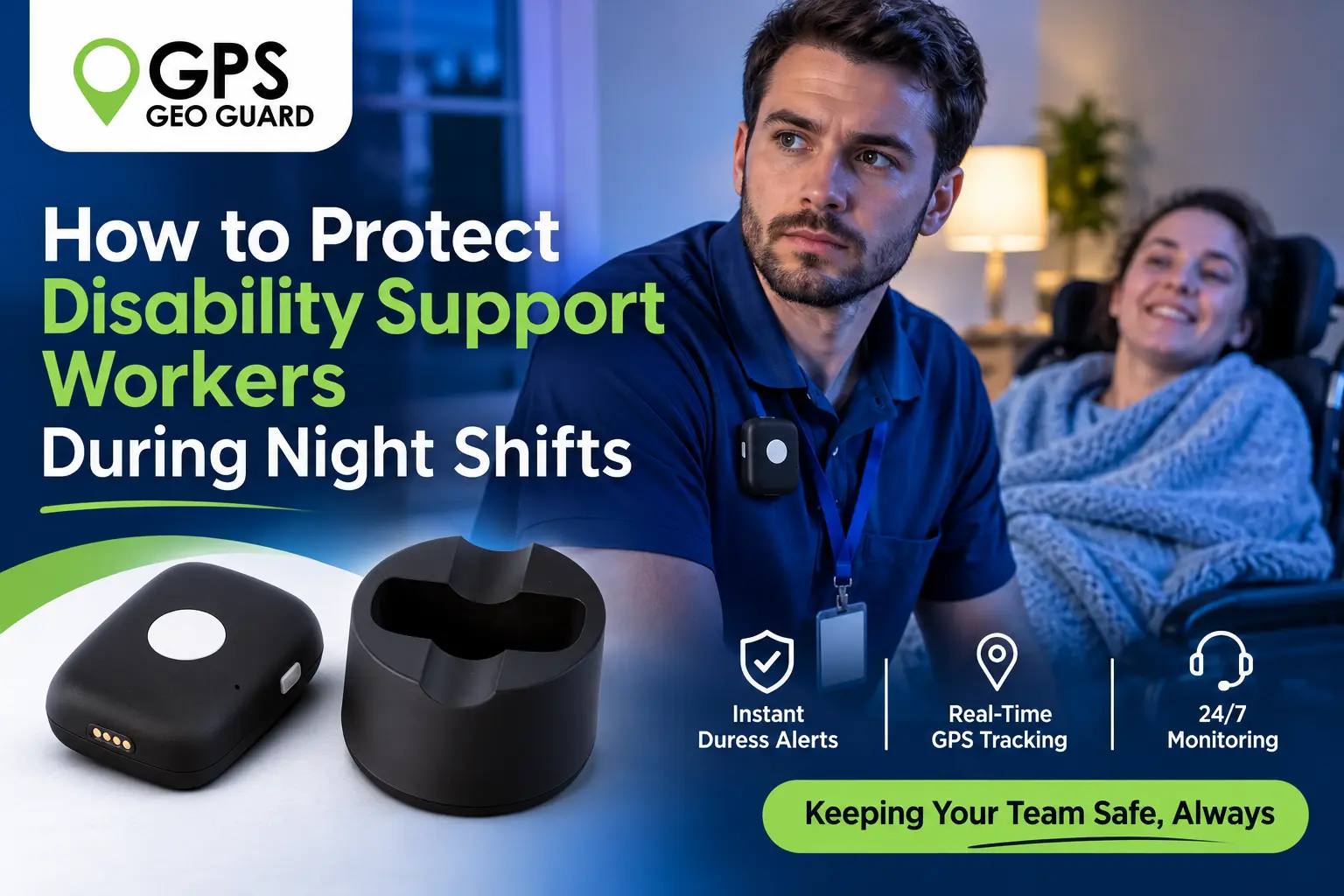
How to Protect Disability Support Workers During Night Shifts
Many organisations run around the clock, and disability support workers are often on their toughest shifts after dark. They’re the ones checking on clients at midnight, often with little support available if something goes wrong.
Night shifts carry a real set of risks that are hard to see coming. Staff numbers drop, buildings feel quieter than usual, and small problems can turn into bigger ones before anyone notices. This guide looks at why night shifts are riskier for disability support workers and what employers can do to maintain their overnight disability support worker safety.
Why Night Shifts Are Riskier for Disability Support Workers
Night shifts change the entire dynamic of a workplace. Fewer people are around, so a worker dealing with a difficult situation often has to handle it alone, at least for the first few minutes, and that gap matters more than it seems.
Visibility drops as well. Because supervisors and colleagues aren’t moving through the space as often. This means it can take comparatively longer for anyone to notice if something’s wrong. Fatigue adds another layer on top of this, as working through the night goes against the body’s natural rhythm, and tired workers don’t think or react as sharply as they would during the day.
Common Risks Faced During Night Shifts
A client’s behaviour can change without warning
Falls, seizures, and other medical emergencies can occur
Confrontations can escalate quickly with no one around
Workers are often in unfamiliar surroundings (like a client’s home)
Backup isn’t always close by when something goes wrong
Tiredness makes it harder to judge a situation clearly
Accidents can go unnoticed longer with fewer people around
Calling for help takes more time when a worker is on their own
Practical Ways to Protect Night Shift Workers
Knowing overnight support worker risks is one thing; doing something about them is another. Here’s what actually helps keep disability support workers safer during night shifts.
Conduct Risk Assessments
Risk assessments are one of the most useful tools for spotting problems before they turn into incidents. Looking closely at a client’s history, the environment, and any known triggers gives a clearer picture of what a night shift might actually involve.
This kind of groundwork helps match the right support and the right precautions to each specific situation, rather than relying on guesswork once a worker is already on shift.
Keep Communication Open
Staying in touch during a night shift makes a real difference, particularly when a worker is on their own for long stretches. Regular check-ins, whether through a call, message, or app, give workers a way to flag concerns early, before small issues turn into bigger ones.
This kind of ongoing contact also means someone always knows where a worker is and how their shift is going, rather than finding out only after something’s already gone wrong.
Use Duress Alarms
A duress alarm gives workers a fast, reliable way to call for help the moment something goes wrong; there’s no need to reach for a phone or explain what’s happening first. This matters most on night shifts, when a worker might not have time to react or anyone nearby to notice.
Features that make the biggest difference include
GPS tracking to show a worker’s exact location
One-touch SOS for quick activation under pressure
Two-way audio so a monitoring team can check in and respond
Automatic fall or man-down detection if a worker can’t press the button themselves
24/7 monitoring to pick up alerts at any hour
Solutions like GPS Geo Guard’s workforce duress alarms are designed with exactly this kind of situation in mind, so night shift workers always have a reliable way to call for help, even when no one else is around.
Set Check-In Procedures
Check-in night shift safety procedures are a core part of safety, giving workers a clear rhythm to confirm they’re okay throughout a shift. Long gaps between contacts make it harder to notice if something’s gone wrong, which is exactly where overnight support worker risks tend to show up.
A good system usually includes:
Set times to confirm a worker is safe
A clear point of contact for each shift
A simple way to escalate a missed check-in
Backup contacts in case the main one fails
This fits into wider lone worker safety planning and works well alongside a clear alarm escalation process when a worker can’t be reached.
Provide Night-Specific Training
Night shifts come with their own set of challenges, so emergency response for disability workers needs its own focus during training. Workers benefit from knowing how to recognise early warning signs of client distress, what to do if a situation escalates, and how to use any personal safety alarms for support workers before they’re ever in a position where it actually matters.
Training suited to overnight risks also helps build confidence, so workers feel prepared rather than caught off guard when something unexpected happens.
How Duress Alarms Support Disability Support Workers at Night
A good device doesn’t replace training; it backs it up the moment a situation actually unfolds. Night shifts leave little room for error: fewer staff are on hand, client behaviour can shift quickly, and a worker may not have time to think through the right steps before acting. This is exactly the gap GPS Geo Guard’s workforce duress alarms are built to close.
GPS tracking pinpoints a worker’s exact location, which matters most in an unfamiliar client’s home or a property a worker hasn’t visited before
One-touch SOS cuts out the need to explain what’s happening; a single press is enough to get help moving
Two-way audio keeps a trained operator connected to the worker, so they’re not left waiting in silence once an alert goes out
Automatic fall and man-down detection catches medical emergencies even if a worker becomes unresponsive and can’t press the button themselves
24/7 emergency monitoring fills the exact hours when staff numbers are lowest and a colleague noticing trouble is least likely
When an alert is triggered, it also moves through a structured alarm escalation process, so the right response, whether that’s a check-in call, a supervisor alert, or emergency services, happens without delay. For organisations exploring dedicated options, GPS Geo Guard also offers a disability panic alarm built specifically around the needs of disability support work.
Disability care worker safety depends on more than good intentions at night. It depends on a system that notices when something’s wrong and acts on it fast, which is what this kind of device, and the monitoring behind it, is designed to do.
Conclusion
Night shifts will always carry more risk for disability support workers, but that risk can be managed with the right night shift safety procedures, training, and tools in place. Risk assessments, open communication, clear check-ins, and proper training all play a part, and a reliable duress alarm ties it together when a worker needs help fast.
GPS Geo Guard’s workforce duress alarms are built to support disability support workers through exactly these situations, day or night. Book a demo or get a quote to see how it could work for your team.
Frequently Asked Questions (FAQs)
How quickly can help arrive after a duress alarm is triggered?
Response times vary by provider, but a clear alarm escalation process is designed to connect workers to help within minutes.
Do duress alarms work in client homes with poor mobile signal?
Duress alarms rely on mobile network coverage, so signal strength can affect performance. It’s worth checking coverage for the areas your workers visit.
Can a duress alarm be used alongside existing check-in procedures?
Yes, it works well alongside check-ins, covering the gaps between scheduled contact.
Is specific training needed to use a duress alarm effectively?
Basic training helps workers activate the device correctly and know what to expect once an alert is sent.
Are duress alarms only useful during night shifts?
No, they’re useful across all shifts, though night shift risks like isolation make them especially valuable then.


